Descriere
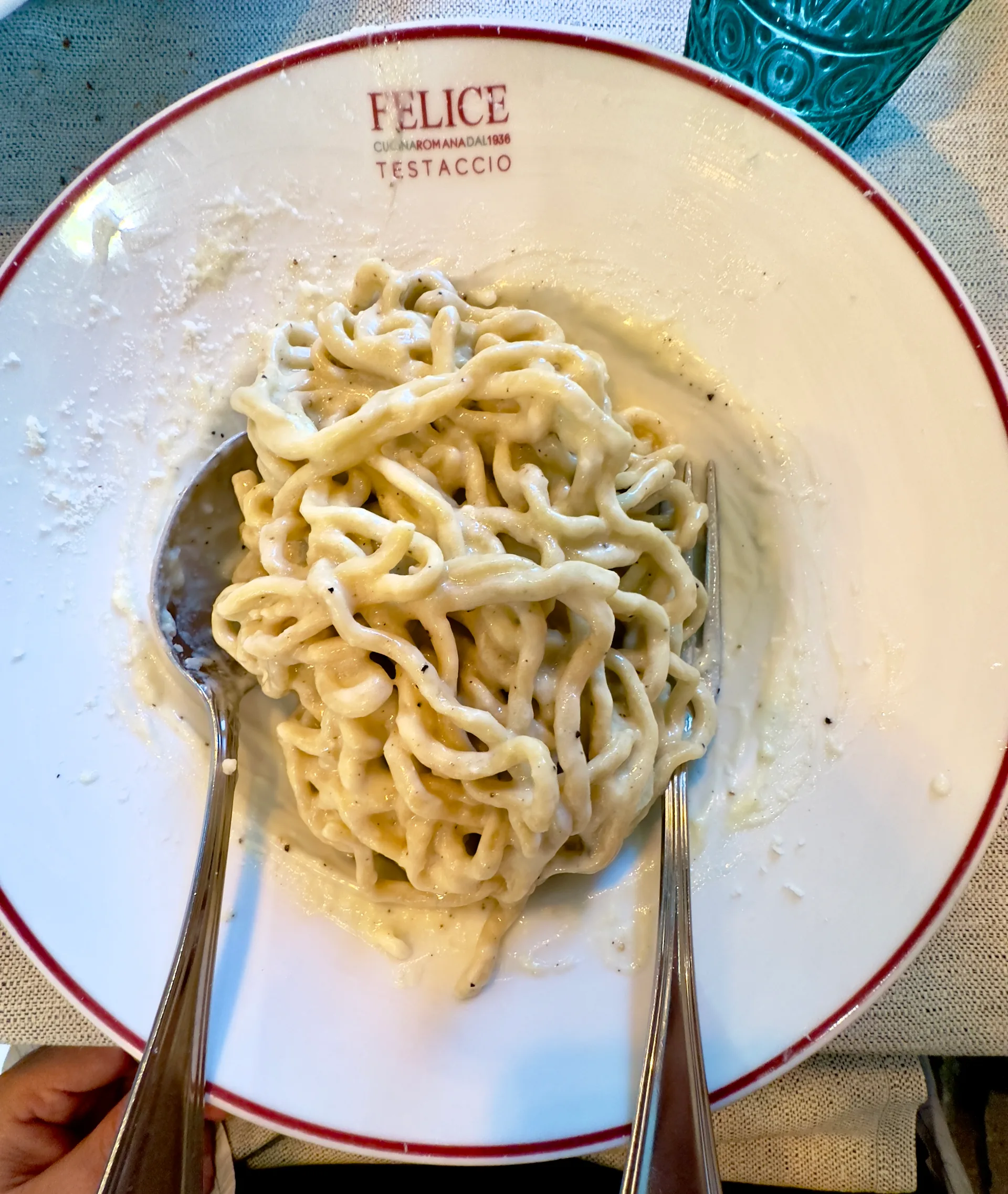
Magie și simplitate: o cremă mătăsoasă de pecorino și piper negru. Felul de mâncare care îi pune la încercare pe toți bucătarii.
Ingredientele rețetei tradiționale
Paste - Pecorino - Piper
Ingrediente interzise
Smântână - Unt
Utilizarea acestor ingrediente este considerată o greșeală de neiertat pentru toți iubitorii acestui preparat.
Posibile alergeni
Gluten
Stil alimentar / Precepte
VegetarianHalalKosher
Regulament
---
Ghidurile Foodoso ale celor mai buni locuri unde să mănânci cacio e pepe
Întrebări Frecvente
Cum se face Cacio e Pepe originală fără ca pecorino să se lipească?
Secretul constă în apa de fierbere: trebuie să aibă amidon în cantitatea potrivită, așadar fierbe pastele și ia puțină apă de fierbere cu câteva minute înainte de final. Pecorino trebuie ras foarte fin și amestecat departe de foc, adăugând apa puțin câte puțin până se obține o cremă. Tigaia nu trebuie să fie fierbinte — tocmai acolo se pierde totul: prea multă căldură și brânza se întinde și se strânge. Smântână și unt? Nu există în Cacio e Pepe, sub sancțiunea descalificării!
Care sunt ingredientele rețetei originale?
Trei ingrediente, doar trei ingrediente: paste (în mod tradițional tonnarelli sau spaghetti), pecorino romano ras foarte fin și piper negru măcinat în momentul preparării. Cacio e Pepe nu include smântână, unt sau orice alt grăsime adăugată — cine le pune gătește de fapt alt preparat. Secretul constă în apa de fierbere a pastelor, folosită cu parcimonie pentru a crea acea cremă care leagă totul fără a deveni lipicioasă.
Are there variations of cacio e pepe?
Let's just say Romans would grimace if you used the word "variation" in connection with cacio e pepe. That said, in practice you do find versions with a mix of Pecorino and Parmigiano (milder, less aggressive), or with different pasta shapes like rigatoni or mezze maniche, but variations stop there, as far as we know.
Se poate face Cacio e Pepe cu paste proaspete sau necesită doar paste uscate?
Tradiția romană cere paste uscate, de obicei spaghetti. Pastele proaspete eliberează mai puțin amidon în apa de gătit, iar tocmai acel amidon este cel care leagă sosul — fără el, pecorino tinde să nu se lege bine. Totuși, la Roma este deja o obișnuință frecventă să fie servită cu tonnarelli proaspeți cu ou, așa că putem spune că din acest punct de vedere totul este permis.
How many calories are in a plate of Cacio e Pepe?
An 80g serving of finished pasta on the plate contains approximately 450-550 calories, depending largely on how much pecorino is used. It's not a light dish—the truth is that there are no fats that can be reduced without compromising the recipe.
Origins - Where does cacio e pepe come from?
The Cacio e Pepe originates in Lazio, almost certainly from the pastoral traditions of Rome and the Lazio region. Some trace it back to transhumant shepherds who carried with them dry, non-perishable ingredients — Pecorino and pepper traveled well on long journeys. The most widely accepted version places it as a popular Roman dish between the 19th and early 20th centuries, though no precise date exists.
Where to eat authentic Cacio e Pepe in Rome: which trattorias should you choose?
The most famous ones in Rome are certainly Flavio al Velavevodetto and Felice a Testaccio. That said, Foodoso exists precisely to answer this question because you can find it in unpretentious trattorias too, often better than the overly famous places.
Is there a world cacio e pepe day?
Yes, November 6th is recognized as the world cacio e pepe day de Cacio e Pepe. It's a fairly recent date, born more from social media and gastronomic communications initiatives than from centuries-old tradition — but for fans of the dish, any excuse to cook it is welcome.
Which city serves the best cacio e pepe in the world
Rome, without much debate. In our city, there are neighborhood trattorias where cacio e pepe Cacio e Pepe is prepared with a mastery that is difficult to replicate elsewhere — Testaccio and Trastevere remain the go-to neighborhoods for those who want to enjoy a truly convincing version.
What wine pairs well with cacio e pepe?
The truth is that such a flavorful and peppery dish calls for a white wine with some body, not something too light. A Frascati Superiore DOC holds up well to the saltiness of the Pecorino while staying true to the Lazio region. Alternatively, a Greco di Tufo DOCG from Campania has that mineral quality that cleanses the palate nicely between bites. Those who prefer red can venture into a Cesanese del Piglio, tannic enough to stand up to the pepper.