Popis
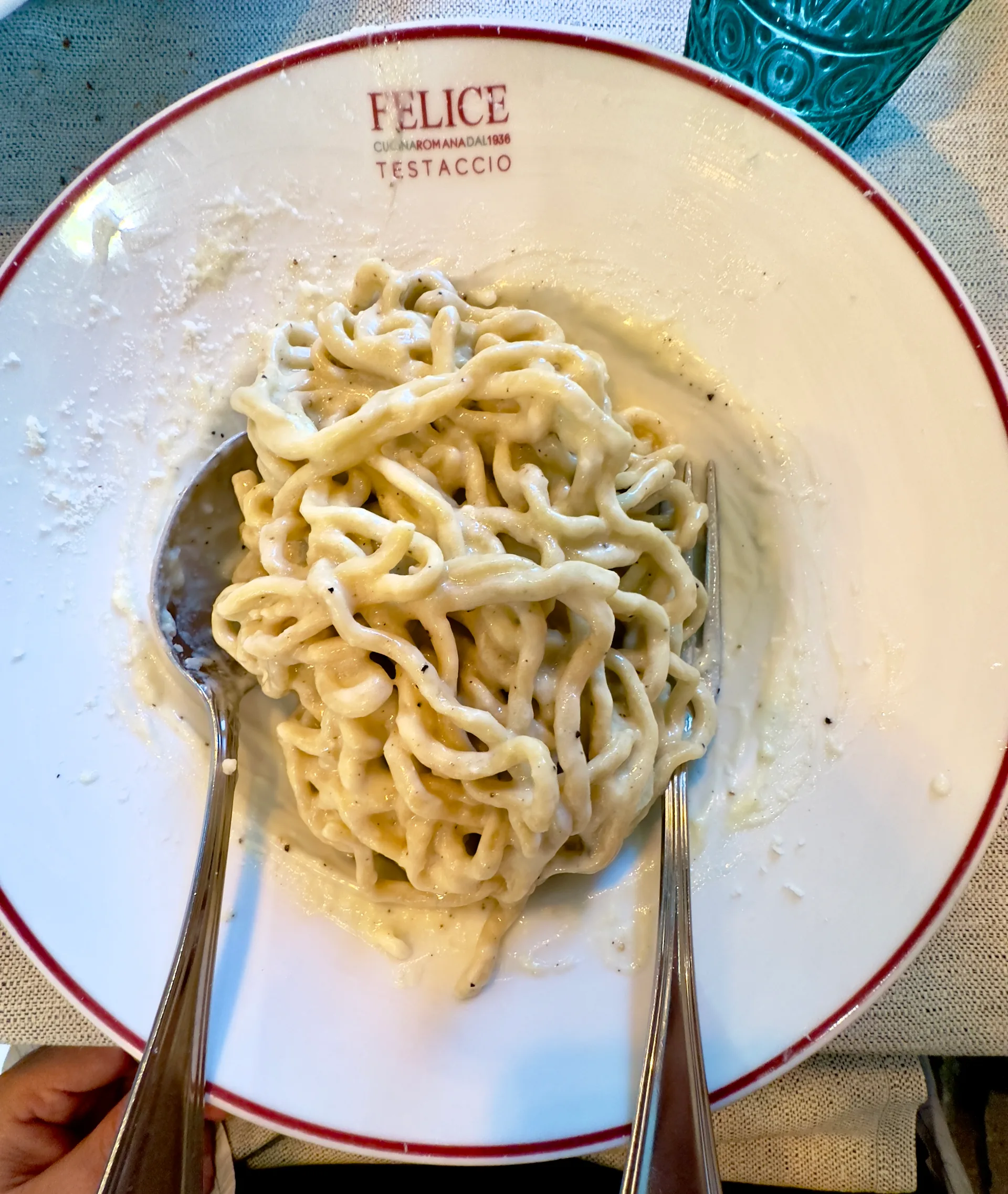
Kouzlo a jednoduchost: hedvábný krém z pecorina a černého pepře. Pokrm, který prověří každého kuchaře.
Ingredience tradičního receptu
Těstoviny - Pecorino - Pepř
Zakázané ingredience
Smetana - Máslo
Použití těchto ingrediencí je považováno za nepřijatelnou chybu všemi milovníky tohoto pokrmu.
Možné alergeny
Gluten
Způsob stravování / Předpisy
VegetariánskéHalalKošer
Disciplinář
---
Průvodce Foodoso nejlepšími místy na degustaci cacio e pepe
Často kladené otázky
Jak se dělá originální Cacio e Pepe, aby se pecorino nesrazilo?
Tajemství tkví ve vodě z vaření těstovin: musí mít správné množství škrobu, proto těstoviny vařte a několik minut před koncem odeberte trochu vody z vaření. Pecorino nastrouhejte velmi najemno a míchejte mimo oheň, přidávejte vodu postupně, dokud nevznikne krémová omáčka. Pánev nesmí být příliš horká – právě tam se prohrává souboj: příliš vysoká teplota způsobí, že se sýr táhne a sráží. Smetana a máslo? V Cacio e Pepe nemají místo, jinak je recept diskvalifikován!
Jaké jsou ingredience originálního receptu?
Tři ingredience, pouze tři ingredience: těstoviny (tradičně tonnarelli nebo spaghetti), velmi najemno nastrouhaný pecorino romano a čerstvě mletý černý pepř. Cacio e Pepe nepočítá se smetanou, máslem ani žádným jiným přidaným tukem – kdo je přidává, prostě vaří jiný pokrm. Tajemství spočívá ve vodě z vaření těstovin, která se používá střídmě, aby vznikla krémová omáčka spojující vše dohromady, aniž by byla lepivá.
Are there variations of cacio e pepe?
Let's just say Romans would grimace if you used the word "variation" in connection with cacio e pepe. That said, in practice you do find versions with a mix of Pecorino and Parmigiano (milder, less aggressive), or with different pasta shapes like rigatoni or mezze maniche, but variations stop there, as far as we know.
Lze připravit Cacio e Pepe s čerstvými těstovinami, nebo vyžaduje pouze suché?
Římská tradice vyžaduje suché těstoviny, typicky spaghetti. Čerstvé těstoviny uvolňují do vody při vaření méně škrobu, a právě ten škrob drží omáčku pohromadě — bez něj má pecorino tendenci se nedostatečně vázat. V Římě je však dnes běžnou praxí podávat je s čerstvými vaječnými tonnarelli, takže řekněme, že v tomto ohledu je vše dovoleno.
How many calories are in a plate of Cacio e Pepe?
An 80g serving of finished pasta on the plate contains approximately 450-550 calories, depending largely on how much pecorino is used. It's not a light dish—the truth is that there are no fats that can be reduced without compromising the recipe.
Origins - Where does cacio e pepe come from?
The Cacio e Pepe originates in Lazio, almost certainly from the pastoral traditions of Rome and the Lazio region. Some trace it back to transhumant shepherds who carried with them dry, non-perishable ingredients — Pecorino and pepper traveled well on long journeys. The most widely accepted version places it as a popular Roman dish between the 19th and early 20th centuries, though no precise date exists.
Where to eat authentic Cacio e Pepe in Rome: which trattorias should you choose?
The most famous ones in Rome are certainly Flavio al Velavevodetto and Felice a Testaccio. That said, Foodoso exists precisely to answer this question because you can find it in unpretentious trattorias too, often better than the overly famous places.
Is there a world cacio e pepe day?
Yes, November 6th is recognized as the world cacio e pepe day Cacio e Pepe. It's a fairly recent date, born more from social media and gastronomic communications initiatives than from centuries-old tradition — but for fans of the dish, any excuse to cook it is welcome.
Which city serves the best cacio e pepe in the world
Rome, without much debate. In our city, there are neighborhood trattorias where cacio e pepe Cacio e Pepe is prepared with a mastery that is difficult to replicate elsewhere — Testaccio and Trastevere remain the go-to neighborhoods for those who want to enjoy a truly convincing version.
What wine pairs well with cacio e pepe?
The truth is that such a flavorful and peppery dish calls for a white wine with some body, not something too light. A Frascati Superiore DOC holds up well to the saltiness of the Pecorino while staying true to the Lazio region. Alternatively, a Greco di Tufo DOCG from Campania has that mineral quality that cleanses the palate nicely between bites. Those who prefer red can venture into a Cesanese del Piglio, tannic enough to stand up to the pepper.