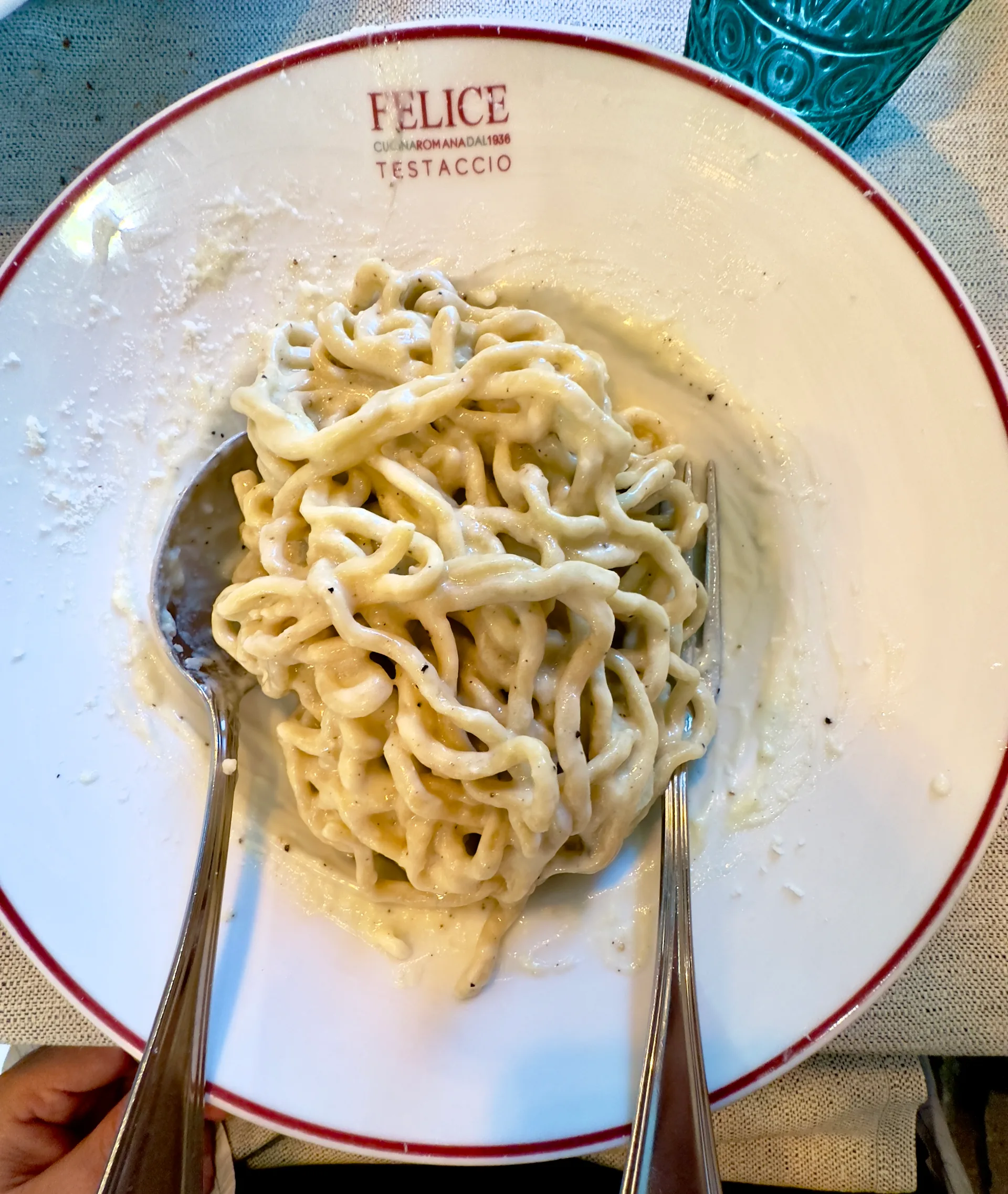
描述
魔法与简约:丝滑的羊奶酪与黑胡椒奶霜。这道菜是每位厨师的终极考验。
传统食谱原料
面食 - 佩克里诺芝士 - 黑胡椒
禁用原料
奶油 - 黄油
使用这些原料被所有这道菜肴的爱好者认为是不可接受的错误。
可能含有的过敏原
麸质
饮食风格 / 饮食禁忌
素食清真洁食
规程
---
Foodoso 指南:品尝 奶酪黑胡椒意面 的最佳餐厅排名
常见问题
How do you make authentic Cacio e Pepe without the pecorino clumping?
The secret is all in the pasta cooking water: it must have the right amount of starch, so cook the pasta and reserve some of the cooking water a few minutes before it's done. The pecorino should be grated very finely and mixed off the heat, adding the water a little at a time until you get a creamy sauce. The pan must not be too hot—that's actually where most people go wrong: too much heat and the cheese becomes stringy and curdles. Cream and butter? They don't exist in authentic Cacio e Pepe, or it's disqualified!
What are the ingredients of the original recipe?
Three ingredients, just three: pasta (traditionally tonnarelli or spaghetti), finely grated Pecorino Romano cheese and freshly ground black pepper. The {nomePiattoEstesa} does not call for cream, butter or any other added fat — anyone who adds them is cooking a different dish altogether. The secret lies in the pasta cooking water, used sparingly to create that creamy coating that binds everything together without becoming gluey.
Are there variations of cacio e pepe?
Let's just say Romans would grimace if you used the word "variation" in connection with cacio e pepe. That said, in practice you do find versions with a mix of Pecorino and Parmigiano (milder, less aggressive), or with different pasta shapes like rigatoni or mezze maniche, but variations stop there, as far as we know.
Can you make Cacio e Pepe with fresh pasta or does it require dried pasta only?
Roman tradition calls for dried pasta, typically spaghetti. Fresh pasta releases less starch into the cooking water, and that starch is precisely what holds the sauce together — without it, the pecorino tends not to bind well. However, in Rome it has become quite common to serve it with fresh egg tonnarelli, so we can say that in this regard, anything goes.
How many calories are in a plate of Cacio e Pepe?
An 80g serving of finished pasta on the plate contains approximately 450-550 calories, depending largely on how much pecorino is used. It's not a light dish—the truth is that there are no fats that can be reduced without compromising the recipe.
Origins - Where does cacio e pepe come from?
The 奶酪黑胡椒意面 originates in Lazio, almost certainly from the pastoral traditions of Rome and the Lazio region. Some trace it back to transhumant shepherds who carried with them dry, non-perishable ingredients — Pecorino and pepper traveled well on long journeys. The most widely accepted version places it as a popular Roman dish between the 19th and early 20th centuries, though no precise date exists.
Where to eat authentic Cacio e Pepe in Rome: which trattorias should you choose?
The most famous ones in Rome are certainly Flavio al Velavevodetto and Felice a Testaccio. That said, Foodoso exists precisely to answer this question because you can find it in unpretentious trattorias too, often better than the overly famous places.
Is there a world cacio e pepe day?
Yes, November 6th is recognized as the world cacio e pepe day 奶酪黑胡椒意面的. It's a fairly recent date, born more from social media and gastronomic communications initiatives than from centuries-old tradition — but for fans of the dish, any excuse to cook it is welcome.
Which city serves the best cacio e pepe in the world
Rome, without much debate. In our city, there are neighborhood trattorias where 奶酪黑胡椒意面 奶酪黑胡椒意面 is prepared with a mastery that is difficult to replicate elsewhere — Testaccio and Trastevere remain the go-to neighborhoods for those who want to enjoy a truly convincing version.
What wine pairs well with cacio e pepe?
The truth is that such a flavorful and peppery dish calls for a white wine with some body, not something too light. A Frascati Superiore DOC holds up well to the saltiness of the Pecorino while staying true to the Lazio region. Alternatively, a Greco di Tufo DOCG from Campania has that mineral quality that cleanses the palate nicely between bites. Those who prefer red can venture into a Cesanese del Piglio, tannic enough to stand up to the pepper.