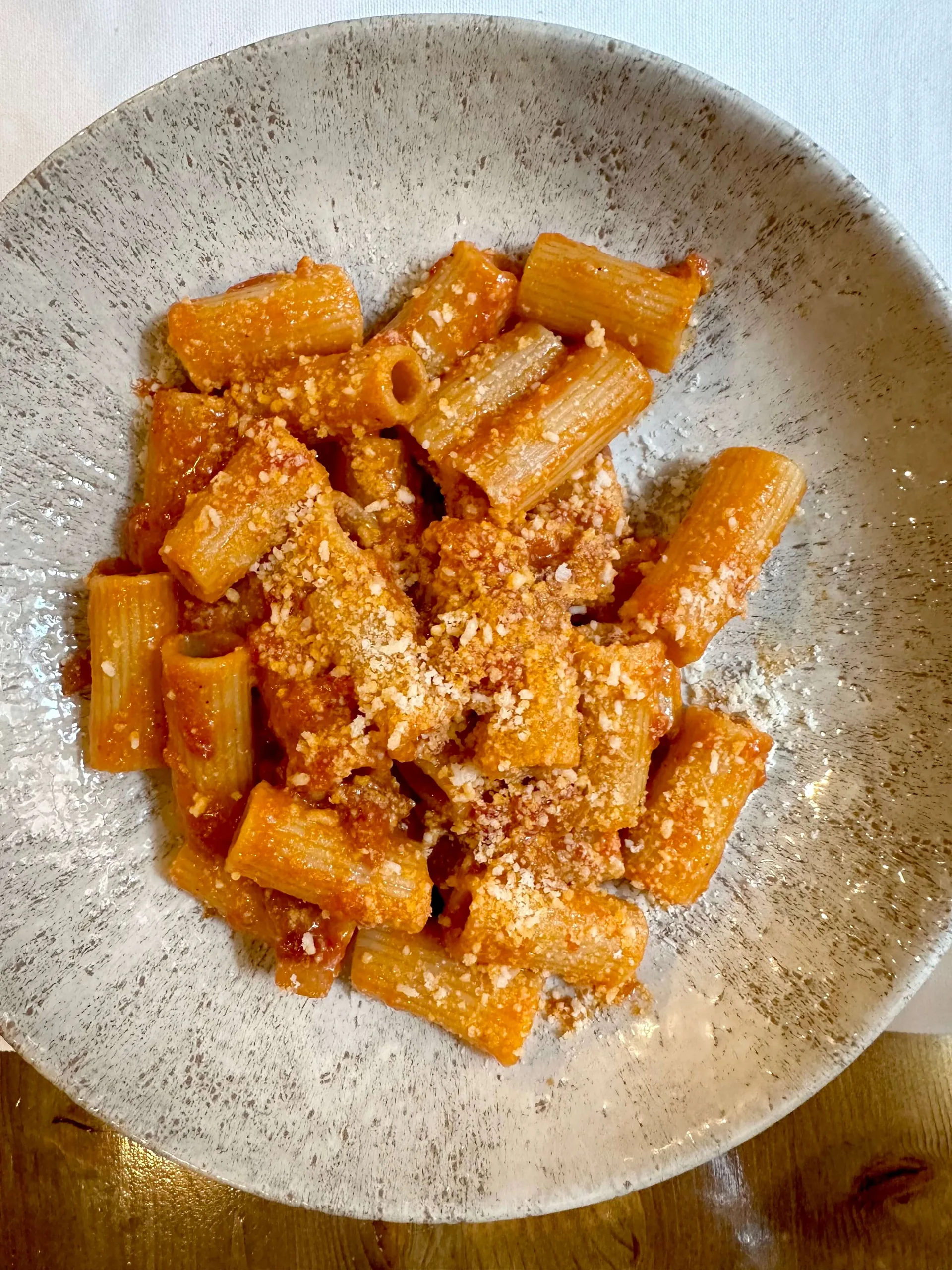
描述
罗马的红色灵魂:番茄酱、猪颊肉与罗马羊奶酪。一种浓郁而经典的味道。
菜肴来源
罗马 - 阿马特里切
原名
Pasta all'amatriciana
传统食谱原料
面食 - 猪颊肉 - 佩克里诺芝士 - 黑胡椒 - 剥皮番茄
禁用原料
培根 - 大蒜 - 洋葱
使用这些原料被所有这道菜肴的爱好者认为是不可接受的错误。
可能含有的过敏原
麸质
饮食风格 / 饮食禁忌
杂食哈拉姆(禁止)塔瑞夫(禁止)
Foodoso 指南:品尝 阿马特里恰纳 的最佳餐厅排名
常见问题
What are the ingredients of the original recipe?
The original pasta all'amatriciana recipe calls for guanciale, peeled tomatoes, pecorino romano, black pepper and of course pasta. That's it. No onion, no garlic, no pancetta — and if anyone tells you otherwise, they're not talking about real amatriciana.
How do you cook the original amatriciana from Amatrice step by step?
Start with guanciale cut into strips and brown it in a pan until the fat becomes transparent and crispy. Deglaze with a splash of dry white wine, then add the peeled tomatoes crushed by hand. The sauce cooks for about twenty minutes over medium heat. Add the pasta — strictly spaghetti or bucatini — and toss everything together. Sprinkle generously with grated pecorino romano and black pepper only at the end. Onion has no place in this recipe.
Pancetta or guanciale: what's the difference?
Guanciale comes from the pig's jowl, pancetta from the belly — and it's no small difference. Guanciale has a higher fat content and above all a more intense and savory flavor, which dissolves during cooking in a completely different way. In original amatriciana only guanciale is used, and substituting it with pancetta is one of the classic mistakes that makes lovers of this dish turn up their noses.
Origin - Where does amatriciana come from?
Pasta all'amatriciana originates from Amatrice, a small town in Lazio in the province of Rieti, on the border with Abruzzo. The original version was called 'gricia' — without tomato — and tomato only arrived later, probably in the 18th century. Rome later adopted it and made it their own, so much so that many today consider it a Roman dish, but its roots are entirely from Amatrice.
Do you put onion in Amatriciana?
No. Onion doesn't go in amatriciana, and on this the recipe deposited by the Municipality of Amatrice leaves no room for interpretation. Some people put it in, but at that point you're talking about something else.
What pasta shape is best suited for amatriciana?
Traditionally spaghetti is used, which remains the official format in Amatrice. In Rome, half-length pasta has also become popular, which collects the sauce in a different way and has its supporters. Bucatini is a very common alternative in the city, although some find it awkward to eat. The pasta should be made from durum wheat semolina and cooked al dente — on this there is no debate.
Is there a world day of Amatriciana?
Yes, it has existed since 2026 when the municipality of Amatrice chose March 6th as World Pasta all'Amatriciana Day. Before 2026 there were various dates with different meanings, but hopefully from now on everyone will celebrate only March 6th.
In which city can you eat the best amatriciana in the world?
If you want the version most faithful to tradition, Amatrice remains the point of reference — even after the earthquake, local restaurants guard the recipe with considerable seriousness. Rome, on the other hand, offers a rounder and more popular version, one that has conquered the world. Let's say these are two different experiences, both valid in their own way. To be fair, the most correct answer is not just one city, but Lazio in general, which includes both Rome and Amatrice.
What wine should I pair with a plate of Amatriciana?
With amatriciana you need something that can stand up to the guanciale and pecorino without overpowering them. A Cesanese del Piglio, a Lazio DOC wine, works wonderfully — a red with character but not heavy. Alternatively, a young Montepulciano d'Abruzzo, which has just the right rusticity for such a dish. Those who prefer to stay in the region can also try a dry Frascati Superiore, if you're looking for something fresher and less demanding.
How many calories does a plate of Amatriciana have?
A serving of pasta all'amatriciana comes to at least around 550-650 kilocalories, but it depends greatly on the amount of guanciale and pecorino used. It's not a light dish, but it's certainly a dish worth suspending your diet for, at least for one meal.